Starting a career in healthcare does not always require spending four years in college. For many people who want to work directly with patients and become part of a medical team, becoming a Medical Assistant in California can be a practical path into the healthcare industry.
Medical assistants play an important role in medical offices, clinics, and healthcare facilities by supporting physicians, helping patients, performing clinical procedures, and managing essential administrative tasks. From taking vital signs and assisting with examinations to scheduling appointments and maintaining medical records, medical assistants help healthcare teams provide efficient patient care.
California continues to have a strong demand for trained healthcare professionals, making medical assisting an attractive option for students, career changers, and anyone looking for a hands-on healthcare career without committing to a traditional four-year degree.
If you are wondering how to become a medical assistant in California, this guide explains every step, including education requirements, training options, certification, career preparation, and how to choose the right medical assistant program.
CHAC helps students gain practical skills and knowledge to prepare for careers in the healthcare industry.
Discover Programs →The path to becoming a medical assistant in California usually involves completing a healthcare training program, developing clinical skills, gaining practical experience, and preparing for employment. Here are the main steps:
The first requirement for most medical assistant programs is a high school diploma or equivalent GED.
A strong foundation in subjects such as:
can help students succeed during medical assistant training.
You do not need years of previous healthcare experience to start. Many students enter medical assistant programs as their first step into the healthcare field.
Choosing the right medical assistant school in California is one of the most important decisions in your career journey.
While some people try to learn medical assisting through informal workplace training, a structured education program provides a stronger foundation by combining:
When comparing medical assistant programs, look for a school that provides more than just textbook knowledge.

A quality program should include:
✓ Hands-on laboratory training
✓ Experienced instructors
✓ Clinical skill development
✓ Externship opportunities
✓ Career preparation support
✓ Flexible scheduling options
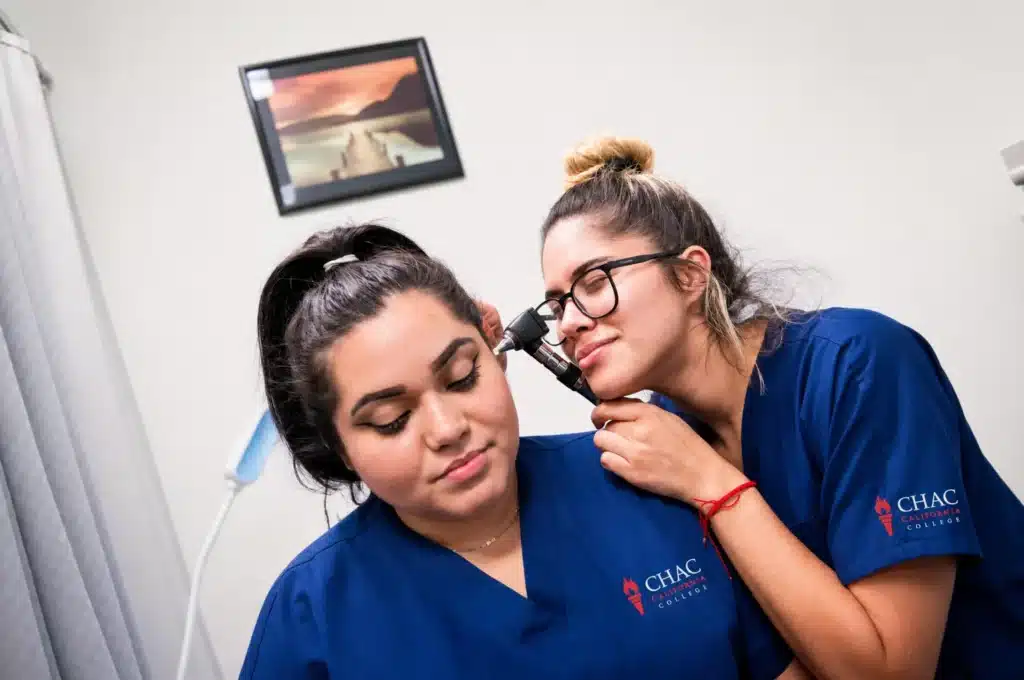
A hands-on learning environment allows students to practice real procedures before entering a professional healthcare setting.
Discover how a Medical Assistant program can help you build the skills, knowledge, and confidence needed to begin a career in the healthcare field.
Learn More About the Program →Medical assisting is a skill-based healthcare profession.
Reading about procedures is helpful, but confidence comes from practicing them.
Students should have opportunities to learn skills such as:
This practical experience helps students feel more prepared when they begin working in medical offices and clinics.

A professional medical assistant needs to understand both patient care and healthcare office operations.
A complete medical assistant program typically covers:
| Clinical Skills | Administrative Skills |
|---|---|
| Vital signs | Medical records |
| Patient preparation | Appointment scheduling |
| EKG procedures | Insurance basics |
| Infection control | Healthcare communication |
| Assisting examinations | Office procedures |
Learning both areas gives graduates flexibility because medical assistants often move between front-office and back-office responsibilities.
One of the most valuable parts of medical assistant training is gaining experience in a real healthcare environment.
An externship allows students to apply classroom knowledge while working with actual healthcare workflows.
During an externship, students may experience:
This experience helps bridge the gap between being a student and becoming an entry-level healthcare professional.
At California Healing Arts College (CHAC), the Medical Assistant program includes hands-on campus training and a 240-hour externship in an affiliated healthcare setting, allowing students to practice skills in a real-world environment before graduation.
A common question students ask is:
California does not require medical assistants to hold a state license or mandatory certification to perform permitted medical assisting duties.
However, completing a recognized training program and earning certification can help demonstrate your knowledge and skills to employers.
The Medical Board of California explains that medical assistants are generally unlicensed professionals who perform administrative, clerical, and technical supportive services under appropriate supervision.
Many employers prefer candidates who have:
Common certification options include:
Certification requirements vary depending on the organization offering the credential.
Discover how a Medical Assistant program can help you build the skills, knowledge, and confidence needed to begin a career in the healthcare field.
Learn More About the Program →A medical assistant is a healthcare professional who supports doctors and other medical providers by performing both clinical and administrative responsibilities.
Unlike some healthcare careers that focus only on patient care or office management, medical assisting combines both sides of healthcare.
A typical day for a medical assistant may include:
Medical assistants may assist healthcare providers with tasks such as:

Medical assistants also help healthcare offices operate smoothly through tasks such as:
Because medical assistants work closely with both patients and healthcare providers, successful professionals need a combination of technical skills, communication abilities, and attention to detail.