California’s growing demand for heating, ventilation, air conditioning, and refrigeration professionals has created new opportunities for people looking for a hands-on technical career. If you enjoy troubleshooting, working with equipment, and solving real-world problems, becoming an HVAC technician can be a practical path into the skilled trades.
The process is more straightforward than many people think. Most successful HVAC technicians begin by completing a career-focused training program, developing hands-on skills, earning important certifications like EPA Section 608, and gaining experience working with heating and cooling systems.
This guide explains the steps to become an HVAC technician in California, the training requirements, EPA 608 certification process, important skills, and how a professional HVAC program can help you start your career.

Becoming an HVAC technician in California does not require a traditional four-year college degree. Many professionals start their careers by completing a vocational HVAC training program, gaining hands-on experience, earning industry certifications, and developing the technical skills needed for entry-level HVAC positions.
While every career path is different, most successful HVAC technicians follow these six steps:
The first step to becoming an HVAC technician in California is meeting the basic education requirements for HVAC training programs. Most HVAC schools require students to have a high school diploma or GED before enrollment. Previous HVAC experience is usually not required because career-focused programs are designed to teach beginners the fundamentals from the ground up. Before starting HVAC training, students should be comfortable with:
A willingness to learn and work with equipment is often more important than previous technical experience.
The next step is choosing a professional HVAC training program that provides both classroom instruction and hands-on lab experience. A quality HVAC school should teach students how heating, ventilation, air conditioning, and refrigeration systems work in real-world environments.
During HVAC training, students typically learn:
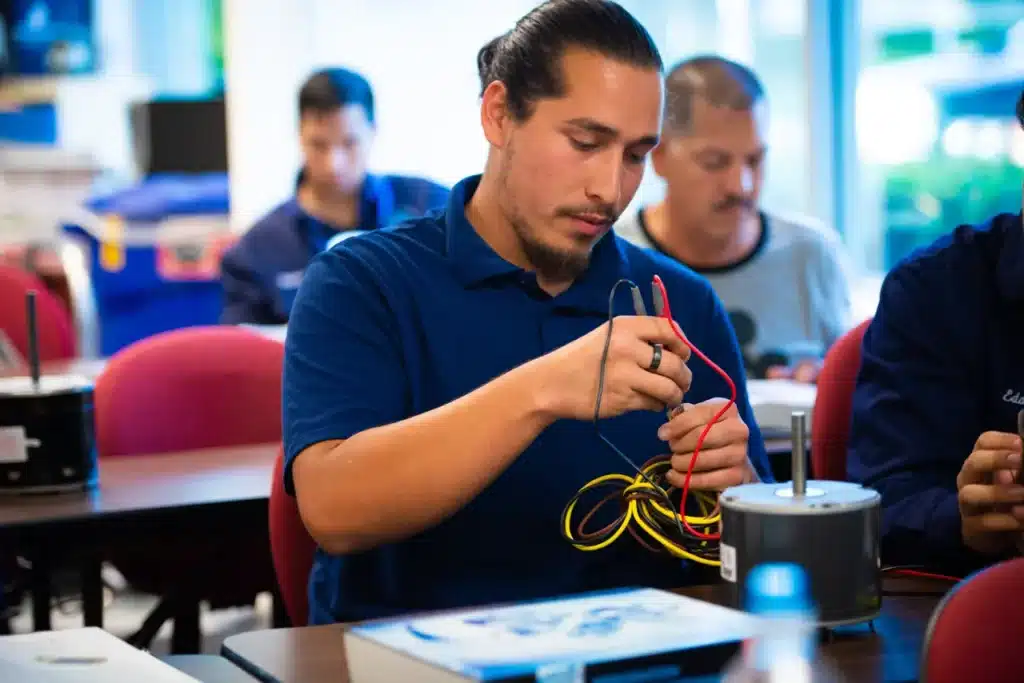
Hands-on training is especially important because HVAC technicians work directly with complex equipment. Practical experience helps students build confidence before entering the workforce. Gain practical skills and hands-on experience through CHAC’s HVAC/R training program.
START YOUR HEALTHCARE CAREER
Build Your Future as an HVAC R
Classroom knowledge is important, but HVAC is a hands-on trade that requires practical skills. During training, students should have opportunities to practice working with real HVAC equipment and learn how to diagnose common system problems.
Important hands-on skills include:
| Skill Area | What Technicians Learn |
|---|---|
| Electrical Troubleshooting | Testing circuits, understanding components, and diagnosing electrical issues |
| System Maintenance | Inspecting, servicing, and maintaining HVAC equipment |
| Equipment Installation | Installing and connecting HVAC components correctly |
| Problem Diagnosis | Identifying system failures and finding effective solutions |
Developing these skills helps future technicians become more prepared for entry-level HVAC jobs after completing their training.
EPA Section 608 certification is an important requirement for HVAC technicians who work with regulated refrigerants. The certification shows that technicians understand proper refrigerant handling procedures and environmental safety requirements.
Many HVAC training programs include preparation for EPA 608 certification to help students build the knowledge needed for this important industry credential.
After completing HVAC training and earning relevant certifications, the next step is gaining professional experience. Many new HVAC technicians begin their careers in entry-level roles where they continue developing their skills while working with experienced professionals.

Early career experience helps technicians improve troubleshooting abilities, learn workplace procedures, and become familiar with different HVAC systems.
HVAC technology continues to evolve, and successful technicians often continue improving their skills throughout their careers. After gaining experience, HVAC professionals can explore additional opportunities such as:
Continuing education allows technicians to expand their career options and stay updated with industry changes.
At California Healing Arts College (CHAC), students can build the foundation needed to start an HVACR career through career-focused training that combines technical knowledge with hands-on learning. The program is designed to help students develop practical skills, prepare for industry certifications, and take the first step toward becoming an HVAC technician in California. Gain practical skills and hands-on experience through CHAC’s HVAC/R training program.
START YOUR HEALTHCARE CAREER
Build Your Future as an HVAC R
An HVAC technician is responsible for installing, maintaining, troubleshooting, and repairing heating, ventilation, air conditioning, and refrigeration systems.
Because California experiences different climate conditions across the state, HVAC professionals work on many types of equipment, including residential air conditioners, heating systems, heat pumps, commercial cooling systems, and refrigeration units.
Typical HVAC technician responsibilities include:
HVAC work combines mechanical knowledge, electrical skills, customer service, and problem-solving. A successful technician needs both classroom knowledge and practical experience working with real equipment.
Choosing the right HVAC training program can make a major difference when beginning a career in the skilled trades. At California Healing Arts College, students can gain practical knowledge and hands-on experience through the HVACR Technician program.

The program is designed for students who want to develop real-world HVAC skills, including:
Students receive career-focused training designed to help them move toward entry-level HVAC opportunities. Whether you are starting a new career, changing fields, or looking for a practical technical profession, HVAC training can provide the foundation needed to begin your journey.
Gain practical skills and hands-on experience through CHAC’s HVAC/R training program.
Learn More About the Program →Learn more about the HVACR Technician program at California Healing Arts College and discover how hands-on training can help you build the skills needed for a future in HVAC.