



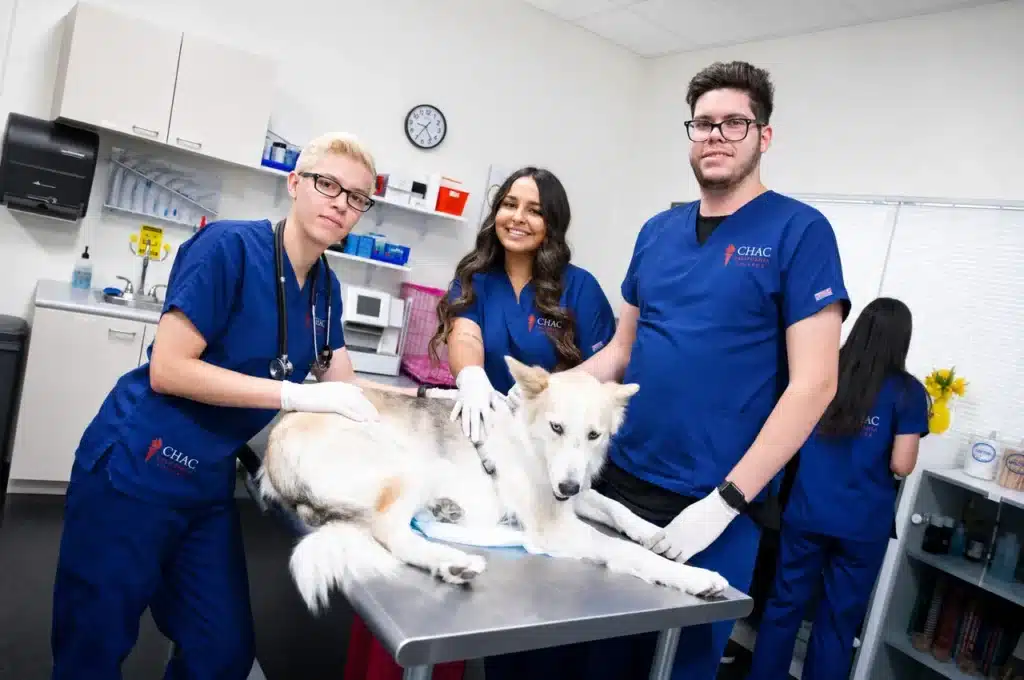
Working as a veterinary assistant takes much more than simply loving animals. Veterinary assistants support veterinarians and veterinary technicians, help care for animal patients, communicate with pet owners, maintain clean clinical environments, and help veterinary teams stay organized throughout the day.
To succeed, you need a combination of hands-on animal care skills, communication abilities, attention to detail, teamwork, compassion, and the ability to stay calm in a fast-paced environment.
The good news? Many of these veterinary assistant skills can be learned and strengthened through structured training and real-world practice.
What Skills Do You Need to Be a Veterinary Assistant?
The most important veterinary assistant skills generally fall into three categories: animal care skills, clinical support skills, and professional or interpersonal skills.
Here is a quick overview:
| Essential Skill | Why It Matters in a Veterinary Setting |
|---|---|
| Animal handling and restraint | Helps animals and veterinary staff remain safer during care |
| Understanding animal behavior | Helps identify fear, stress, discomfort, or aggression |
| Patient observation | Helps the veterinary team notice important changes |
| Infection control and sanitation | Helps maintain a safe clinical environment |
| Veterinary terminology | Makes instructions and records easier to understand |
| Attention to detail | Reduces the risk of missed information or mistakes |
| Communication | Supports pet owners and the veterinary team |
| Compassion | Helps provide respectful care during stressful situations |
| Teamwork | Keeps veterinary care organized and efficient |
| Time management | Helps assistants manage multiple responsibilities |
| Physical stamina | Supports lifting, standing, cleaning, and animal handling |
| Emotional resilience | Helps assistants manage difficult cases professionally |
Build Your Future as a Veterinary Assistant
Gain practical skills and hands-on experience through CHAC’s Veterinary Assistant training program.
Learn More About the Program →1. Animal Handling and Restraint Skills
Safe animal handling is one of the most important veterinary assistant skills. Assistants need to know how to approach, position, move, and restrain animals appropriately while following the veterinary team’s instructions.
Because even friendly pets may become frightened or defensive in a clinic, good restraint requires awareness of animal behavior as well as proper technique.
2. Understanding Animal Behavior
Veterinary assistants should be able to recognize basic animal behavior and body language. Changes in posture, movement, vocalization, appetite, or activity may indicate stress or discomfort.
The assistant’s role is not to diagnose the animal, but to notice important changes and report them to the appropriate veterinary professional.
3. Patient Observation and Monitoring
Veterinary assistants may observe animals before or after procedures and during routine care or recovery. This requires paying attention to behavior, appearance, movement, comfort, and other noticeable changes.
The key is to observe carefully, document accurately, and report promptly while staying within the veterinary assistant’s role.

4. Infection Control, Cleaning and Sterilization
Maintaining a clean veterinary environment is an important part of patient care. Veterinary assistants may help disinfect examination rooms, maintain kennels, prepare equipment, and follow infection-control procedures.
Understanding proper sanitation, personal protective equipment, and safe handling of contaminated materials helps protect both animals and veterinary staff.
5. Veterinary Terminology and Basic Clinical Knowledge
Veterinary assistants benefit from understanding basic veterinary terminology, anatomy, common procedures, animal care principles, and clinical workflow.
This knowledge makes it easier to understand instructions and communicate with the veterinary team. Structured veterinary assistant training can help students build this foundation before entering the workplace.
6. Attention to Detail
Small details can matter in veterinary healthcare. Veterinary assistants need to follow instructions carefully, maintain accurate information, prepare equipment correctly, and notice changes in patients.
Strong attention to detail helps assistants stay organized and communicate important information to the veterinary team.
7. Communication With Pet Owners
Veterinary assistants work with people as well as animals. Pet owners may be worried or emotional, making clear, respectful communication especially important.
Assistants should listen carefully, communicate professionally, and know when medical questions need to be referred to a veterinarian or other appropriate veterinary professional.
8. Compassion and Emotional Intelligence
Veterinary clinics often care for frightened, sick, or injured animals and concerned pet owners. Compassion helps veterinary assistants respond to these situations with patience and professionalism.
Strong emotional intelligence also helps assistants remain focused and provide appropriate support during difficult or stressful situations.
9. Teamwork in a Veterinary Clinic
Veterinary assistants work alongside veterinarians, veterinary technicians, reception staff, and other team members. Good teamwork requires listening, communicating clearly, following instructions, and understanding each person’s responsibilities.
Being dependable and willing to help can make the entire veterinary team more effective.
10. Time Management and Organization
Veterinary clinics can become busy quickly, with several animals and responsibilities requiring attention at once.
Veterinary assistants need to prioritize tasks, stay organized, and recognize when something requires immediate attention—without sacrificing accuracy or patient care.
11. Physical Stamina and Manual Dexterity
Veterinary assisting is a hands-on career that may involve standing, bending, cleaning, carrying supplies, preparing equipment, and helping handle animals of different sizes.
Physical stamina and manual dexterity can therefore be important skills for handling everyday responsibilities safely and effectively.
12. Staying Calm Under Pressure
Veterinary clinics can be unpredictable. An emergency may arrive, an animal may become frightened, or the veterinary team may suddenly need to respond quickly.
Veterinary assistants should be able to remain calm, listen carefully, follow instructions, and stay focused even when the environment becomes stressful.
Discover Career Opportunities in Healthcare
CHAC helps students gain practical skills and knowledge to prepare for careers in the healthcare industry.
Discover Programs →Hard Skills vs. Soft Skills for Veterinary Assistants
Both types of skills matter.
- Hard skills are practical abilities that can be taught, practiced, and evaluated. Examples include animal handling, restraint, sanitation procedures, understanding veterinary terminology, recordkeeping, and assisting with appropriate clinical tasks under supervision.
- Soft skills describe how effectively you work with animals, clients, and coworkers. Communication, compassion, dependability, adaptability, teamwork, time management, and attention to detail all fall into this category.
The strongest veterinary assistants combine both.
Technical ability without communication can make teamwork difficult. Compassion without proper handling skills may not keep an animal safe.
Veterinary practices need people who can bring the two together.

What Veterinary Assistant Skills Do Employers Look For?
Current occupational information and veterinary job postings consistently emphasize a combination of animal handling and professional skills.
Employers may look for candidates who can demonstrate:
- Safe animal handling and restraint
- Animal care experience
- Attention to detail
- Clear communication
- Reliability
- Teamwork
- Cleaning and infection-control awareness
- Accurate recordkeeping
- Ability to follow directions
- Time management
- Compassion
- Willingness to learn
Job requirements vary by veterinary practice, so applicants should always review each job description carefully. For someone entering the field without previous veterinary employment, this raises an important question:
How do you demonstrate these skills when you have never worked in a veterinary clinic? Enrolling in reputable vet assistant programs and gaining supervised experience can help bridge that gap.
How Do You Learn Veterinary Assistant Skills?
Some veterinary assistant skills can be studied in a classroom or online lecture. Others need to be practiced.
You can read about animal restraint, for example, but reading alone cannot fully recreate the experience of positioning an animal correctly while communicating with another member of a veterinary team.
The same principle applies to equipment preparation, clinical workflow, sanitation procedures, and professional communication.
Build Your Future as a Veterinary Assistant
Gain practical skills and hands-on experience through CHAC’s Veterinary Assistant training program.
Learn More About the Program →Building Veterinary Assistant Skills at CHAC
California Healing Arts College’s Veterinary Assistant program certification in Carson, California is designed to combine education with hands-on preparation.
The program consists of 800 clock hours completed over 36 weeks and combines online lectures with hands-on campus laboratory training.
Students also complete a 240-hour externship at an affiliated veterinary site, providing an opportunity to experience a professional veterinary environment and apply skills developed during training.